
The Guilty Party?

Biometric authentication in India’s Public Distribution System is designed so that the ration dealer, from whom food rations are collected, is constructed as responsible for diversion of goods to the private market. Our work in Kerala in 2011-2012 problematised this assumption, asking questions about the role and financial sustainability of ration shops in the state.

“Only fraudsters will not want it”. It is August 2012 and we sit in a telecentre in Malappuram district, northern Kerala. Telecentres are government-coordinated, but privately managed, one-stop shops where users can access a computer and connection to the Internet, at a time where this – especially in rural districts – is far less than ubiquitous in Keralan society. Telecentres grouped under the Akshaya telecentre project, an award-winning project which connected villages throughout Kerala through low-cost telecentres accessible to poorer citizens, are already a fundamental interface for Internet access in poorer villages. Since early 2012, they are also in charge of Aadhaar registration, the process through which user credentials are collected in the national biometric identification programme.

It is 2012, and Aadhaar is nowhere near the staggering enrolment rates that will characterise the following decade. But the system’s message is clear. If all Indian residents are to be Aadhaar-registered with their biometric and demographic credentials, in a unique programme capable of combining such credentials with entitlements, large-scale leakage such as that affecting the Public Distribution System (PDS) of the country will be attacked at its basis. As the biggest food security programme in the nation, providing highly subsidised food to below-poverty-line people across the country, the PDS suffers from the systematic diversion of its commodities to the private market, where the same commodities are sold at much higher prices. Ration dealers, in charge of the ration shops through which PDS goods are redistributed through the nation, are largely seen as “the guilty party” for such diversion.

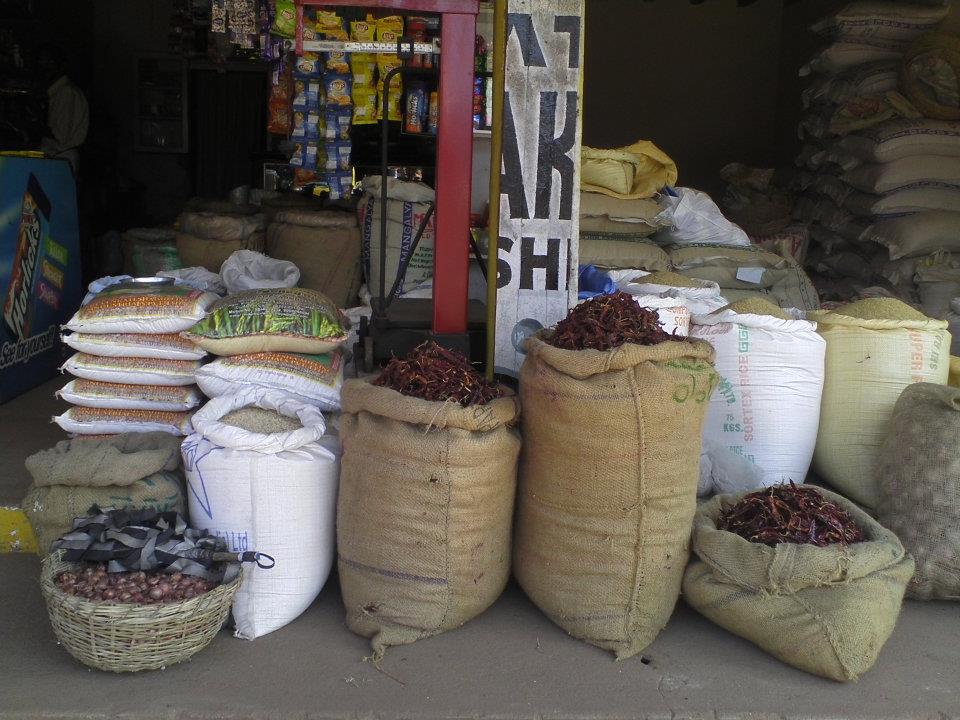
Food supplies, Taliparamba municipality, Kerala, November 2011

The new biometric technology is designed around their responsibility. Back in August 2012, Kerala is still to see the first pilot project that will link the PDS to Aadhaar, making access to food in ration shops conditional to the person’s authentication through the Aadhaar system. A few years later, when implemented, the Aadhaar-based PDS will require users to be enrolled in the programme, and to have linked their ration cards (displaying their entitlements according to poverty status) to their Aadhaar records. For ration dealers, this will mean a restructuring that ties sales of subsidised rations to successful authentication of individuals through the system, leaving no backup option in the event that authentication does not work or is not supported by the needed infrastructure.

Time and again, much has been said on the exclusion of users who, for reasons spanning from fingerprint readability to incorrect registration, have had their ration provisions discontinued since the incorporation of Aadhaar into the PDS. Less is known, however, on the ration dealers’ experience of the programme, and on the extent to which they were given a choice at the time of registration. But as we sit in the telecentre in Malappuram district, and I ask what will be of those ration dealers who will be unable or unwilling to shift to Aadhaar in their transactions, the response of the field facilitator is trenchant: “Only fraudsters will not want it”.

There is more to deepen on what is meant by a “fraudster” here. Ration dealers, through whom rations are distributed to PDS users across the country, have been seen as the main actors of a leakage that amounts to about 30% according to the lowest estimate for 2011–12. But what is the financial situation of ration dealers, and what scope is there for the biometrically reinforced policing of their role?

The 1990s were an extremely harsh decade for the PDS in Kerala. Started up as universal, the PDS became then targeted to below-poverty-line users in a way that left a minimal quota – approaching the market price – to users above the poverty line. Sudden and narrow, the move to a targeted system shrunk the customer basis of ration shops in the state, leading many to either closing down or resorting to debt. A wave of ration dealer suicides followed the shift to a targeted PDS, whose memory was still very vivid during my work in the state. Having been constrained by a structural adjustment programme that imposed tight constraints on the PDS, ration dealers became widely unable to generate a living from the shrunk customer basis that remained active in their shops.

A biometric system of transaction monitoring targets exactly the ration dealers. On the one hand, such a system leaves untouched the distribution chain before the ration shop: but it is here that a substantial part of diversion has scope for happening, across the multiple phases of transportation and storage of goods. On the other, the system targets the transaction point where “fraud” can happen, constraining the ration dealers’ opportunity to sell goods on the market for a higher price. This makes the ration dealer the targeted, “guilty party” in a biometric monitoring system: Aadhaar-based monitoring is here at the last mile, leaving open questions on a distribution chain that comprises of many passages, especially in foodgrain-consuming states.

The “guilty party” logic inscribed in the biometric PDS presents at least two issues. The argument that “only fraudsters will not want it” was powerfully articulated early in Aadhaar’s uptake, and openly stated as we assisted to the major campaign of Aadhaar enrollment in the state. But the issues of (a) not targeting transportation and storage, and (b) presenting no survival alternatives for ration dealers roughly affected by the structural adjustment that shrunk their customer basis, have remained. While designed to be effective in controlling the ration dealer, the technology leaves no option for them to rebuild business lives destroyed by a tight policy of structural adjustment.

Technologies crystallise the policies behind them. In constructing the ration dealers as “the guilty party”, Aadhaar’s biometrics dictate a clear causal narration of PDS leakage. While the exclusionary effects of the technology have been tackled by research, the assumption seeing the ration dealer as responsible needs investigation, starting from the structural adjustment policies that cut the PDS down to its bare essentials.
What’s in a card?

Biometric technologies, increasingly inscribed in social protection programmes, crystallise the role of identification as a precondition for users to access vital entitlements. Such a role has, however, an overarching history of non-digital artefacts behind its consolidation.

“For the third time, I have not received my ration card”. Aisha is in her early 50s and lives in the slum colony of Karimadom, at the periphery of Thiruvananthapuram, capital of the southern Indian state of Kerala. In telling her story, she does not show anger or resentment. She is only tired, extenuated by a wait that has protracted for months and that still denies her access to the Public Distribution System (PDS), India’s food security scheme on which millions of households depend for subsistence. The PDS provides essential commodities – primarily rice, wheat, sugar and kerosene, with more supplies varying across states – to below-poverty-line households at highly subsidised prices. But in July 2010, the state of Kerala registered a backlog of over six lakh (600 thousand) ration cards stuck between user application and release, essentially preventing an equal number of households from accessing a vital anti-poverty programme.

Now, in August 2012, Aisha needs her ration card. For beneficiaries of the PDS, obtaining food rations is conditional to being recognised as entitled users, in virtue of a targeted system where the ration card – on which a stamp is put by the ration seller every month at collection point – determines entitlement. Ration cards in Kerala have different colours according to poverty status: they are blue for above-poverty-line (APL) recipients, pink for below-poverty-line (BPL), and yellow for Antyodaya Anna Yojana (AAY), the poorest of the poor who are entitled to greater quantities of subsidised goods. For the third time, Aisha spent the day queueing by the local Taluk Supply Office, the bureau where ration cards are dispensed, hoping in vain to collect a document which appears to be stuck, with many others, in the burgeoning backlog for which the Kerala Rationing Officer responds.

Food supplies, Taliparamba municipality, Kerala, November 2011

The PDS is India’s largest food security programme. Its origins lie in the rationing system introduced in colonial Bombay in 1939, at a time of low production of foodgrains per capita and high reliance on imports. In 1965 it took its current form as a subsidy system in which essential goods are procured by the Food Corporation of India (FCI) and redistributed across the country’s 29 states and 7 special territories, through ration shops which disburse monthly quotas of subsidised items. From 1997, the programme is targeted (with the one exception of the state Tamil Nadu) to users below the poverty line, with special provisions of larger rations made for households qualifying as AAY, the poorest of the poor.

Ration cards are no digital object. Rather than the document itself, in 2010-2011 the government of Kerala digitised the Ration Card Management System (RCMS), a workflow management programme instituted by the Ministry of Food and Civil Supplies. In its essence RCMS was an e-governance solution to computerise the main phases of the ration card release process: application by the user; processing by staff at the TSO; and delivery of the document to the user on TSO premises. Digitising the ration card flow would help process applications more smoothly and effectively, as the Rationing Officer bureau staff discussed with me in December 2010. While narratives of repeated frustration at the TSO, like Aisha’s, abounded in the press at the time, the logic of “digitisation for development” resounded strongly and enthusiastically in officials’ voices.

Fast forward to 2022. Biometric identification, which in the Kerala PDS takes the form of Aadhaar, is increasingly required for users to claim entitlements under the PDS. Launched in 2009, Aadhaar is the flagship programme of digital identity for India’s residents: its free-of-charge enrolment captures essential biometrics (fingerprints and iris scan data) and basic descriptors of enrolees, who are in turn enabled to use these to authenticate for governmental schemes and services. In their very architecture, Kerala’s ration shops changed significantly from the pre-Aadhaar days: while authentication was initially ration-card based, it is now a biometric point-of-sale machine that recognises the user, matches their credentials with their entitlements as registered by the Ministry of Food and Civil Supplies, and disburses rations if successful authentication occurs.

While Aadhaar is largely hailed as overarching model of foundational identity, the use of digital identity as a precondition for entitlements – subordinating service access authorisation to authentication of users – is by no means unique. Evidence on digital identity’s role as an enabler of entitlements is wide: during COVID-19 in Colombia the Ingreso Solidario scheme featured data cross-checking from different government databases, with the apparent purpose of identifying needy households. Information was combined from existing digital data repositories, with little explanation on how decisions were made: in a similar trend, Peru saw the handling of information by the programmes Yo Me Quedo en Casa and Bono Indipendiente as partially obscure, with ‘incertitude being the rule on the determinants of entitlement assignation.

Much discussion is on how digital technology carries responsibility for the exclusions, distortions of monitoring and policy redirection connected to biometric identification. Evolving along these lines, the discussion takes me back to the early days of my Kerala fieldwork: the ration card itself, of which the Aadhaar-based PDS constitutes an augmentation, remains a starkly non-digital artefact, with an inner physical architecture as a booklet with a set of empty spaces for monthly food stamps. The role of identification as a precondition for entitlements is very alive today: as Joseph Atick, the Executive Chairman of ID for Africa, recently noted in a public address, the importance of ID has shifted from being based on identity alone to identification-enabled service provision. Much can and needs to be said about what digital identity systems do to the ability, of lack thereof, of people to access life-saving entitlements; at the same time, the very non-digital roots of the targeting principles inscribed in such technologies need thorough illumination.

It’s 2022, and I just came across this little one from 2012. At the time, my research on Kerala’s Ration Card Management system was met with surprise – most people were puzzled meeting a young PhD student asking questions on that complex ration card workflow, and many offered encouragement to switch to a topic on which “more data” would be available. If back then the question on “what’s in a card” remained very open, the work of colleagues in the digital identity space now offers a much clearer picture of the design behind such a role. While digital identity is capable of massive reifications, the materiality of the authorisation-conditional-to-authentication principle offers illuminating explanations on what digital technology really effects in the identification space.

About me:

My name is Silvia and I am an information systems researcher with a huge passion for fieldwork, technology and, most of all, human rights. I work as Associate Professor at the University of Oslo. Unfair ID is my book project, and at heart, it a life journey inside the injustices produces by digital identity systems.